Types Of Ostomy
There are different types of ostomy surgery to treat inflammatory bowel disease. Most people use “colostomy” as a catch-all phrase for every ostomy type. In reality, an ostomy is an umbrella term for different types of bowel diversions that end up creating a stoma on the abdomen. The most common ones are colostomy and ileostomy.
In this article, we will discuss both these bowel ostomies.
What is an ileostomy?
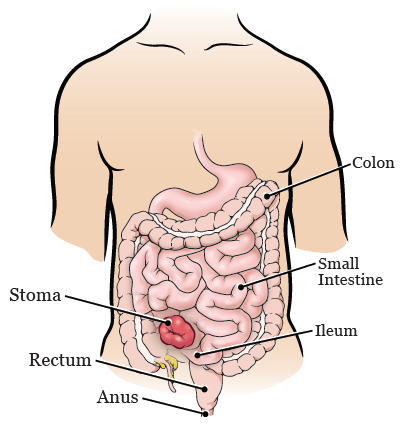
A surgical procedure resulting in a section of the small intestine being brought out through a hole in the abdomen is called an ileostomy. The purpose of this bowel diversion is to allow bodily wastes to leave the body when the colon is unable to function properly due to disease or injury.
The part of the ileum sticking out on the belly is known as a stoma, which appears much like a rosebud.
Generally, there are two types of ileostomy: loop ileostomy and end ileostomy. A loop ileostomy is when a loop of the ileum is pulled out through a cut in the abdomen. The surgeon will give you this ileostomy when the colon and rectum are still intact. All they need is a little time to rest for some time to become fit again to function. Once they are ready to pass the stool, the surgeon performs another surgery to reverse the stoma.
The second type of ileostomy is the end ileostomy, and it is usually permanent. In this surgery, the ileum is disconnected from the colon. The surgeon then pulls the end of the ileum through a cut in the belly. The colon and rectum are either removed or rested inside the abdomen, depending on the medical condition.
Whether or not you have your rectum and anus with an end ileostomy is case-specific. Some patients want to keep their options open in the hopes to find a way to eliminate bodily wastes traditionally in the future. Nonetheless, keeping options open this way will not be possible if there is severe damage to the anus, rectum, or surrounding areas, something which tends to happen with a disease like IBD.
What is a colostomy?
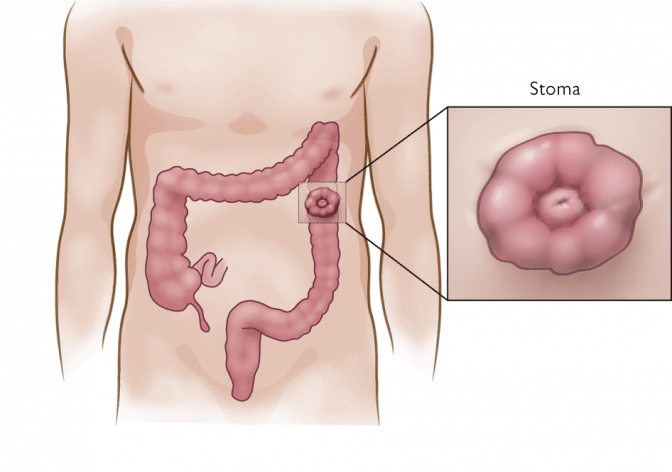
Your surgeon will give you a colostomy if your large intestine needs to be removed or you need to divert stool away from the rectum or anus. In such a case, the stoma created will be on your large intestine.
A colostomy is different from an ileostomy for various reasons.
First, you can irrigate your colostomy to eliminate the need to wear an ostomy bag. This process involves instilling water into the stoma to trigger a bowel movement. As a result, the stool comes out of the stoma, emptying the colon. It is not the case with every person with a colostomy, though. If your stoma produces liquid stools, you will not be able to benefit from colostomy irrigation.
While your surgeon will want to spare your rectum and anus in the hopes to reconnect your bowels to allow you to move bowels the traditional way, it may not be possible with every case. In case of a severe condition when a permanent colostomy becomes a necessity, the surgeon will most probably remove the rectum and anus to prevent future problems..
 Intestinal Health